Saturday, 11 March 2017

Production Company


Warner Brother Studios


For our first production company logo for the start of our opening sequence we decided to use the famous Warner Brothers' clip. It is a worldwide famous company which also owns the subsideries 'New Line Cinema' and 'DC Comics'. Their common choice of movies is evolved around action, thriller and fantasy; examples of their films are the Harry Potter collection, Gravity and Batman. By using this production name, it conveys that the producers of the film 'Classified' have well accomplished experience in thrillers and movies with dark aspects. 


Clearwood Films


First of all, our production name was created by simulating a word from a combination of our names; Emily Howard and Claire Ellis. Clear resembles the name Claire and Wood refers to Howard. This gave the company name a personal touch as our movie 'Classified' was created by a joint partnership. Overall, the name has a rememberable sound which is essential when wanting the audience to recollect who was involved in creating the movie. Our company logo intro does not identify which movies we would be experienced in (if our company was real); much like many others such as Warner Brothers, Miramax etc as their experience may cover a wide range of genres. The ethos of our intro possesses a smooth professional feel; the background of the time-lapse constellation produces a atmosphere of 'reaching for the stars' and escaping into another dimension - which we hope to achieve through our opening sequence. 


Wednesday, 8 March 2017

Risk Assessment

Having awareness of hazards and risks, and identifying people who may be at risk, is essential in order to prevent injury for cast members and crew during shooting. 

Our film opening will be shot in several different locations, since the 'victim' (the protagonist of the opening who the audience follows) is on a journey to hide the mysterious package. The different locations meant that we had to be aware of the changing risks and hazards from one setting to the next. 

The Train Station

The sequence will start at the train station. Especially during the week, train stations are busy; not only could this interfere with continuity, it also presents some hazards. Firstly, we would have to film the shots of the characters getting off the train which requires a considerable amount of speed to avoid getting body parts caught in the automatic train doors. A busy station would affect the speed at which the shot could be taken exiting the train, because we would have to wait for passengers to board and exit before we could shoot. So, to avoid this hazard all together, we have chosen to film on Good Friday; a bank holiday means that trains will be less frequent but also a lot less busy!

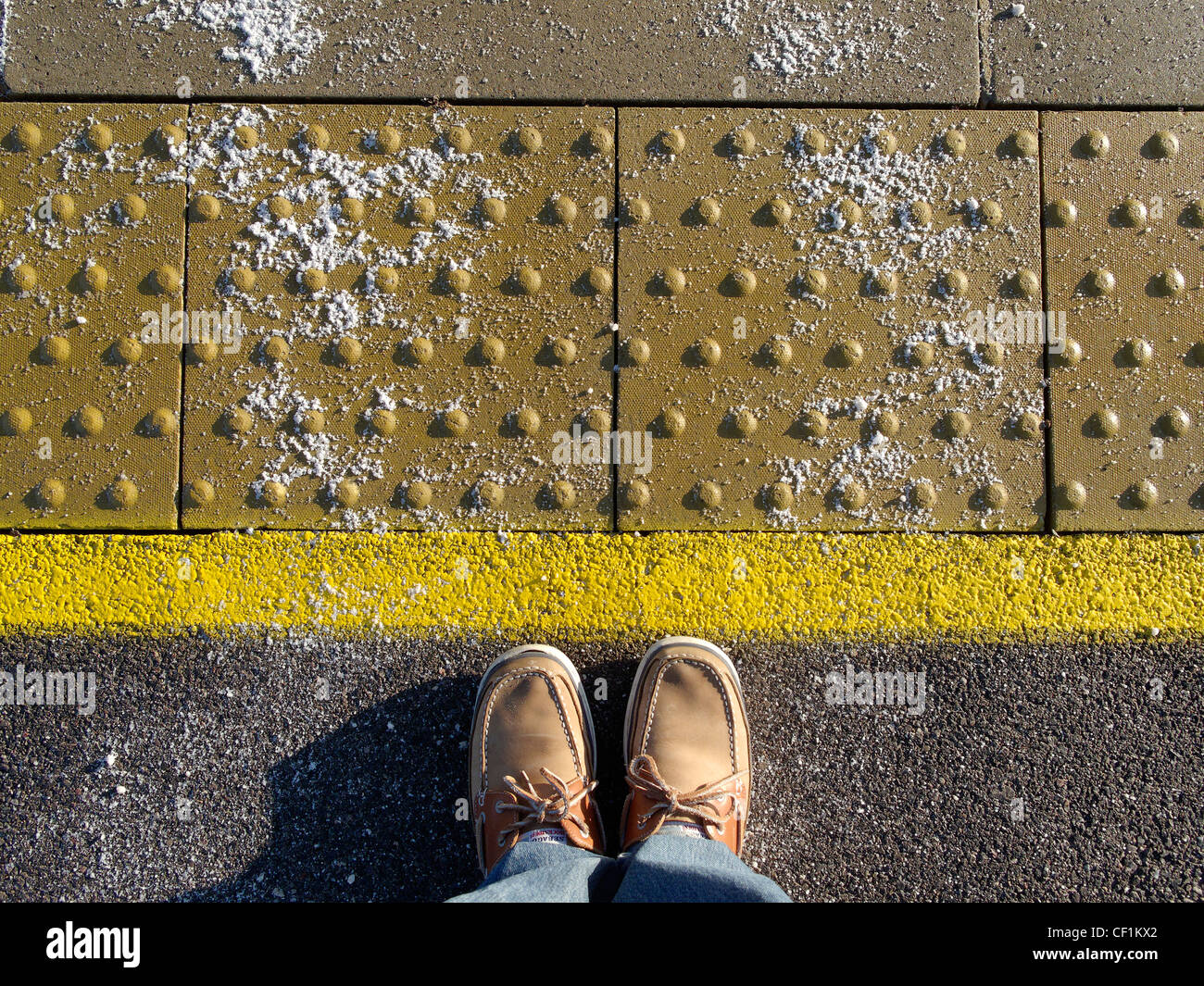
A more obvious hazard at a train station would be the platform itself: to mind the gap between the train and the platform, and to stay away from the platform edge. To prevent any twisted or dislocated ankles on the platform, it is important to consciously take caution while stepping from the train onto the platform and the actor should pay extra attention to the positioning of their feet whilst being filmed. All in all, the general rules at a train station should be followed: stay behind the yellow line at all times, for example.


Image result for behind the yellow line train stationImage result for stuck in train doors


The Roads

The victim will travel along some streets during their journey to hide the package. The biggest and most obvious hazard here would be cars. To avoid being hit by a car (this mainly applies the the camera man), it is important that everyone stays on the pavement at all times and takes the appropriate precautions before crossing any road as usual. Another way to eradicate this hazard is to shoot on quieter suburban residential streets where cars are less frequent and audible. This would also avoid background noise from passing cars, which would make intentional noises more difficult to hear and extract. 


Image result for quiet roadsImage result for nearly run over


The Woods

The woods presents several less-dangerous hazards for the film cast and crew. Both the victim and the protagonist will have to make their way off-path in order to maintain verisimilitude, and the undergrowth can contain stinging nettles and brambles which cause harm. To prevent getting stung or scratched, long sleeved garments should be part of the actor's costume and a path should be selected with less plants. 

Discarded waste is also common in the woods, including glass bottles and sharp scraps of metal. Due to the potential risk of cutting skin, the litter should not be touched at all; after all, any visible litter in the frame could be used as unintentional props to make the setting more realistic for the sequence. 

Logs and sticks on the path may result in people tripping over which could cause a range of different injuries. The only way to avoid this hazard is to clear the pathways that are chosen for the actors and film crew by simply picking up the logs and sticks that present a risk and place them away from the path.

To get high-angle shots, we will use the surrounding trees to help immerse the audience into the action and make them feel like they have a god-like third-person perspective of the event that is taking place. To get the camera this high, the cameraman would have to climb a tree. Although they may only be three feet above the ground, this does not mean to say that they would be free of injury if they fell. The trees in the planned location are also relatively thin and smaller branches are more likely to snap. To prevent this, branches must first be checked to ensure that they are thick live branches. Live branches that are thick enough to hold the weight of a human being will should not break. The cameraman must then look to guarantee that they will be able to safely get down from a branch before they begin to climb. To further eliminate the risk of injury from falling, a general rule will be put into place on the day of shooting that 'nobody must climb onto a tree branch that is more than two feet above the ground'. 


Image result for litter in the woods

Costuming and Props 

There are parts of the costume and props that will be used in the sequence that could hurt actors if not used with care. For instance, both costumes include shoes that have shoelaces. If the shoelaces are not secure and come undone, the actors will trip, especially since the film opening involves running for both characters. This is easily addressed by double-checking that the shoelaces are tied before each shot is taken. 

The antagonist wears a black scarf over their whole face as part of their costume, which dramatically affects their visibility. Although they can still see through the scarf, it is very important to clear all pathways of trip hazards and to only begin filming while there are no members of the general public in the area. The actor who plays the antagonist should familiarise themselves with their surroundings without the mask beforehand in order to make themselves aware of any irremovable hazards (such as trees and low branches).


Image result for untied shoe laces


Monday, 6 March 2017

Marketing


Social Media

In modern society, marketing through social media is one of the most common and easily accessible ways of advertising your product. Wifi and technology appliances have advanced through technological convergence, especially in recent years, and are highly accessible throughout the world (majority of countries, most commonly HIC countries). Social media is the number one form of communicating and is the easiest way to access billions of information just by the click of a button on appliances such as smart phones. Examples of social media include Facebook, Twitter, Snapchat, Instagram etc. Aside from the positives of signing up to these for the users intentions, social media is also the highest form of understanding societies likes/dislikes, hobbies, interests etc. for companies and organisations as millions of people are joined to at least one of these examples of social media. Film advertisement is frequently done on social media; e.g Facebook pages are set up to promote films where people can share, discuss and view trailers just by clicking the film's page. Furthermore, the app Instagram can be used to post snippets of the film such as short clips, camera shots that grab the audience's attention, posters etc. Linking social media to celebrity endorsement, many films advertise themselves by the actors/actresses/background team posting pictures and posts on their social media, giving their fans an inside view of the making of the film which essentially captures their attention. Moreover, social media allows the user to 'check in' where they are, for instance the cinema, and can even put on which film their seeing. 'Check in' numbers can be viewed to see how many people are at the cinema at one time, if a 'friend' on Facebook sees this check in, they may wish to go (especially if the film is popular).


Trailers

Movies always have a trailer released before the actual movie release date. Trailers allow the audience to see a brief selection of clips all from the original movie; allowing the movie to gain publicity before reaching cinemas. This gives the chance to target their specified audience and allow society to obtain a glimpse of what the plot contains. Fast transitioning shots are often used in trailers which leaves the audience slightly confused, heightening the enigma of the film which causes the public to want to see the film (often occurs in horrors, actions, thrillers etc. to create a climatic series of events). Trailers are placed at the beginning of films in the cinema, these often take up a time slot of around 20 minutes, as audiences are forced to view these before their actual cinema film; trailers shown are of the age rating of the cinema movie as the audience is of this age and upwards. During advertisements on telly, trailers are also slotted in so those watching TV in the comfort of their own home are also targeted by film companies. Social media also links into this form of marketing as social media pages post trailers so those who are members of the accounts can also view it; be this through sponsored Facebook pages (where members can share trailers amongst friends etc). Also, YouTube is a major distributer of film clips such as trailers.


Posters

Another form of marketing is posters; these can be put on display in bus stops, on buses, train stations, magazines etc. They are a still snapshot of the genre and message of the film; sometimes these posters have slogans which heighten the curiosity in the audience and are commonly a catchy, brief statement that stays in the viewers mind. Posters are placed in these areas due to the fact much of society will be in close proximity of it, such as buses which are constantly stopping at one stop to the next, various towns and places on route will be able to view the large poster on the side of the vehicle. It is an effective form of marketing as those who are not on a piece of technology or watching a film can still be captured by the upcoming film through the poster. Posters are often creative and eye capturing seeing as they need to be noticed through the streets etc. Along with the slogan, the main actors names are on the poster as well to greaten their popularity, especially well experienced and paid actors such as Clint Eastwood would receive a wider attention. Every detail of the poster conveys the genre and atmosphere relating to the film; colour, position of character, symbolic messages etc. all partner up to create the overall essence of the movie. 


Socially

Although the film producers are not advertising themselves, another form of marketing is just by the audience socialising with others with those who haven't yet seen the film; you may not realise it, but when you speak positively about a film, you are promoting it. Even an aspect of the 'gratifications theory' links to this (interact); after watching a piece of media it is more than likely that it will be discussed in conversation with friends, family members, neighbours etc. This can even be in the form of online discussions; such as someone posting a status on Facebook regarding a film and mentioning their views on it which can be seen by their whole 'friends' list. If someone goes into detail about the overall feel of the film they see (mentioning the atmosphere created and the constant 'edge of your seat feeling' e.g) they will go to experience what their friend etc. has. There are some negatives of socially marketing films though; some may describe the whole plot to their friend (plot twists and all) and so, may be less likely to see it due to knowing the whole plot. Also, negative feedback on a film will cause those who hear it to turn away from watching the film; withal, this may create a ongoing loop (the one who hears the negative feedback but not seen it would repeat this to others, which will cause them to not see it and so on and so forth).


Websites

Websites are a useful way of strictly posting and regarding anything to do with the upcoming film. Firstly, on a film website, events may be organised (e.g Guerrilla advertising, premieres etc) where all the interested soon-to-be fans can access upcoming events involving the new film. Other things that may be posted on the site would be interviews with those involved in the acting of the production; this gives insight on what they found most interesting and any struggles they faced during filming - it also allows the viewer to have an opportunity to get to know the actors/actresses more than what they may already. This enhances their reasons of watching the film due to being a fan of a celebrity involved. Behind the scenes and bloopers could also be exclusively posted on their official website, which allows the website user to witness the amount of time and effort that goes into creating the film and the processes at which they go through. Furthermore, bloopers and extra clips can be seen as an added bonus which gives the celebrities a sense of realness and mellow/witty etc personality - although this may be viewed as breaking the atmosphere of a genre (thriller) so bloopers may be posted after the film is released on the website to eliminate any feeling of comic relief from previously watched clips. 

One unique and well known film website is 'Project Prometheus'. Evidently, this website brings a whole new definition of movie websites; this one completely transports the viewer into another era and universe created by the verisimilitude which is present in its fictional posts. Links on the website such as character interviews enables the movie and its plot to essentially come to life. For example, 'Project Prometheus Training Centre' with an 'apply now' button; the fans are then placed into the world of sci-fi, giving them the opportunity to be involved in the 'worldwide project based on discovering planets and artificial intelligence'). Snapshots from the website convey character fact files and clips of them talking to the viewer; permitting them to be classed as 'real' and for them to gain supporters/fans as they are 'revealing' their persona, interests etc. which the film company has created them to have in order to market their film. Additionally, you can share and sign up to this website, allowing the publisher to view how many followers they have and how to post exclusive posts just to those who apply - making the fans have a sense of significance.


Guerilla advertising

Guerrilla advertising can be a number of things. One form is publicity stunts, for example, 'Batman' would meet in cities for meet and greet events to promote the film. The idea would bring to life the concept, along with one of the most famous superheroes; the public would feel completely involved in the movie and the imaginary world of Gotham which would boost the chances of viewing the film - seeing as they had met Batman himself. This is known as 'flash mobs'. Another form of guerrilla marketing is stickers; large painted stickers which would be visible which ever way you walk, such as on the floor or on a plain large wall. It has a similar effect to posters but instead is creative and imprinted - a lot more simpler and direct to the audience. Undercover marketing is also another form which has been used by companies before: Sony set up a campaign in 2002 in which actors were hired to wander the streets asking strangers to take photos of them. During the interaction, the actors would boast and compliment their new phone; essentially persuading the stranger to buy one. For marketing films, disguised marketers may be in the crowd at film events etc. and talk about how great the film is to persuade the person without seeming to be from the company themselves; making it more reliable. A unique form of this marketing was done by the producers of Blair Witch; they sent potential fans content and teasers as to whether the footage (of the Blair Witch) was real or not. Consequently, exacerbating the suspense and the mystery behind the film which society would be intrigued to find the truth about by watching the film. If people are at an exciting and unique event, they will post on Facebook, take videos for snapchat and tweet about it on Twitter; so even those who they don't discuss it with or witness it themselves will be impressed by the event (if successful).

There are many positives to this form of marketing as it is cheap to execute (majority), allows for those who witness it to discuss it by word -of-mouth with friends etc essentially causing publicity to have a snowball effect (becoming increasingly larger). Although, some forms of marketing could go against the authorities such as the large graffiti stickers, and some members of the public way point out that events and disguised actors are merely set up for society to be persuaded into watching the film. Also, bad weather and other forms of obstacles can cause the event to have a decreased effect.


Celebrity endorsement

Celebrity endorsement is when celebrities are used to promote a film or promote it unintentionally. As some celebrities are widely known, if they promote a film many will take their word for it due to their experience and high reputation in society. Fans would have the mindset of; if their favourite celebrity likes it, "I'm bound to as well". Celebrities may be asked to attend events/premieres in order to widen the attenders and for those who arrive to have a bonus of seeing a famous celebrity. On the other hand, celebrities may market films unintentionally. For example, during filming, celebrities may post on their social media a selfie of them with cast members etc and behind the scenes clips and photos; the followers of the celebrities get to take the journey on creating the film. Celebrity's excitement due to being on set and their experience in a new film encourages fans to also gain excitement. Furthermore, celebrities may post countdowns to the film and post messages like "Book your tickets now" and "See you soon" to further motivate society to see the film; the technique of direct address is also used here, making it more specific to the individual. 


Synergy

Synergy involves two companies both partnering together to equally promote each others product. In context, fast food chains will join together with film companies to create toys/merchandise etc. for children's meals to promote the film, and the film company may include an advert in the opening sequence in the cinema to promote their sponsor equally. Certain cinemas also join up with film companies to promote the latest film by creating popcorn holders with the poster printed on the side, drink cups with the characters printed on etc e.g Empire and Divergent. One of the most well known examples of synergy is James Bond's Skyfall and Adele's Skyfall single used for the film. Adele's song has been created for the movie which promotes the film; and by having Adele singing the signature song promotes her as the listener would be more inclined to listen to her tracks and may venture into the other songs released on her album. 


Saturday, 4 March 2017

Marketing of our film 'Classified'


Facebook page


If our film production was created in real life, we would create a Facebook page such as the one we have made above. Our page name would be 'Official Classified' (although this name was unavailable when setting up this page) to ensure that the audience know ours is verified and not a fan account/fake page. Fake pages could post false information and pretend they are the actual film company account; to filter out these, we would contact Facebook to stamp a verified sticker on our account and report any false information posted by another page. On our page, we would include everything that real film pages include; post trailers, upcoming events, discussion pages and any other form of information to include the 'likers' of the page to become involved and interested in the upcoming film. As you can see above, you can contact the page if you have any enquiries to the film which is a easy and accessible way to have your questions answered. The 'about' section gives a brief of the upcoming film, possibly the one which will be printed on the back of the DVD cover when that is produced. The pitch gives an insight to the film but does not reveal too much about it, rhetorical questions may be posed in this to form curiosity in the audience. As you can see from above, there are various buttons on the film page; you can share the page with your friends, invite friends to view the page and can event post on the page which statuses such as competitions, merchandise created by companies.


Instagram Page


Instagram works in a similar way to Facebook, but you can only post photos and videos; a more creative form of social media. Our Instagram name would be @clearwood_official; which will be our film company Instagram rather than an individual movie, which gives us an opportunity to post about all the films we wish to create/or are set to be released, behind the scenes shots, events etc. which all involve the film company. If Clearwood Films became a widely known company and is a rich firm, Instagram may give the page a verified blue tick when they discover our company is factual. Our description would advertise the movie and the release date so this is the first thing the viewer of the page sees. A link has been attached to the description which leads to the Facebook page above for 'Classified'; enabling those who are interested about the film to have a wider source of information which merely posts about the film, rather than the film company. The logo of Clearwood would be the profile picture to let the audience memorise and feel familiarised with the image. Snapshots of the film will be posted, not of the characters faces though to create mystery. A countdown would be posted to heighten the excitement of the upcoming film; as we have down on our page above (the font of the numbers looks distressed and bold; linking to the theme of the movie). As the film is a thriller, dull colours would be used to adapt the Instagram page to the conventions of the movie. Short clips would be posted, such as the one above with the black gloves and the parcel, to let the audience obtain what camera shots and objects/themes are shown in the film. We have also posted an eerie logo from Warner Brothers, this is in the form of synergy as we are promoting them due to our partnership of the film, which advertises them and if they post our logo too, balancing this marketing with both party members. The title of the film is also shown; red font conveys blood, danger etc and with the feet and the gap of the train, it is evident that the character has traveled a long distance. This image is used to imprint the title into the viewers mind for further reference when the film is released. The emoji is used as a symbolic message for those who do know the content of the film, the cartoon package in the description hints to what the main focus is on, although this will be a feeling of confusion for those who do not know about this significant object.


Poster


This is a draft of what one of the film posters would look like if it was created for ‘Classified’. Posters are essential for capturing the audiences attention and for conveying the genre of the film. The title of the film has to be in a certain position and colour for the poster to be noticeable. Red connotes danger and blood relating to the gory themes in our production. The overall feel of the poster is very morbid conveying the themes in the plot are not suitable for younger viewers as they may find them distressing. Black and greys fill the background of the poster with connotes death and destruction; also the overpowering of evil and darkness as this is what occurs in the plot. Pathetic fallacy with the storm clouds is used here. The setting represents the same scene as in the opening sequence; a dark forest with bare trees and autumn leaves to familiarise the audience with where some of the film will be set. Seen at the top is the headlining actress’ names; used to promote the movie. The package and its submergence amongst the autumn leaves is the image left at the end of the opening sequence; the mysterious package unfound amongst the leaves. By having the package highlighted by the red, orange and brown leaves, it indicates its significance to the plot line and shows that the package is just waiting to be found - suspense. Credits are shown at the bottom of the poster to give credit to those companies and persons involved in the movie; these are in fine print and at the bottom of the poster to not distract the viewer from the main message of the poster. We came up with a slogan of ‘Unwrap your destiny’; this is a huge enigma and is quite memorable due to its shortness and ability to capture the audience’s curiosity. ‘Unwrap’ relates to the package and the uncovering to discover what is inside (which is not revealed to the audience till the ultimate climax at the end of the film). Use of direct address is shown in the slogan by ‘your’, this singles out the viewer so that they feel the message is personal towards them; this is a self-conscious technique which is widely used in marketing. Lastly ‘destiny’ relates to the future of the human race as a whole; as mentioned in our ‘Pitch’ blog, the parcel’s content is a memory stick with the details of the end of the world; and so in short, ‘Unwrapping your destiny’ is discovering how the whole population and planet will become instinct; explaining why the poster is melancholy. 


Further marketing would be a range of all those shown in the ‘Marketing’ blog which reveals what the majority of film companies do to advertise their movie; such as trailers, events etc. 

Thursday, 2 March 2017

Props and Costumes

Props

In relation to props, the package was the most symbolic from the plot; the whole film is based around it. We decided to use a package for our psychological thriller as it's secrecy would capture the audience's attention; what is in the package? Why are the characters going to such a length to obtain it? It's design of being a plain brown package allows there to be no clue as to what its content holds; the brown paper was often used for purposes in the early 20th century ('brown paper packages tied up with string'), this sense of oldness further enhances the enigma as it seems this simple parcel has traveled great lengths due to its dullness. As the package is tied up with string, it shows close precision has gone into the wrapping of the parcel, yet it does not seem expensively decorated; conveys it has not been created from an expensive organisation etc. and instead from the lowest profile character imaginable. Another significant prop is the black gloves, both the antagonist and the protagonist wear these. Firstly, the protagonist wears these gloves (seen putting them on in the opening sequence) as she does not want the risk of finger print traces to be on the package; this added detail shows her cautiousness and sense of awareness, also, the threat of carrying the parcel holds. Similarly, the antagonist wears the gloves to hide all aspects of identity, as if they do not exist at all and are rather like a swift entity that takes the life of the girl in the opening sequence. One common stereotype is that if characters are wearing gloves, they have an hidden aspect of their personality; the girl may be hiding the reason as to why she has the parcel in the first place and the antagonist is hiding every aspect of themselves (their darker purpose, mysterious background etc.). All which heightens the suspense in the thriller. 

Withal, the rope is meaningful as it is the prop that is used to kill the victim. We wanted to create the image that the antagonist was acting on impulse and after finding the victim, would search for a means of exterminating them. In our setting, a piece of rope was found amongst the leaves from a tyre swing which was previously there but after being damaged somehow, the area looked deserted which various materials such as pieces of rope left behind. By using the rope, it heightened the gruesomeness of the murder scene, as the death would be slow; implying the brutal nature of the antagonist. The end of the opening scene discovers that the 'real' package is still in the victims pocket, untouched by the villain. A decoy was used to distract the antagonist from the real package; they are unaware that the true package is just a small proximity away from them - yet they rapidly exit the scene anyway due to an incoming dog and owner. So, the decoy package is another significant prop in the opening sequence; the protagonist's intelligence allows them to manipulate the villain by believing the real package is the one they throw. Suspense is greatened as dramatic irony is used here due to the audience knowing the real package has been swapped with the fake. Following this realisation again at the end of the sequence after the death scene, it allows the plot to continue if this film was produced as the audience would want to discover who finds the package in the woods.


The protagonist's costume consists of dark colours; the hoodie of the character is black along with the shirt which is vertical black and white lines. The line pattern relates to the belief that it reflects tension as the imagery of stripes is the sense of being trapped and oppressed. By the opening scene, it is evident that by possessing the package, your fate is enviable as evil often follows the trace of it. Black connotes death, mystery and power which all reflect the protagonist. Moreover, the blue jeans reflect a feeling of casualness (a typical teenage girl), also, showing that she has dressed practically as speed walking/running will be necessary in case of incoming danger. A high ponytail illustrates the pragmatic situation she is in, flowing hair would be unsuitable for a serious task in the woods. The antagonist's costume is one that elucidates the sense of confidentially surrounding the character. From head to toe, the costume consists of the colour palette of black and white (with the hint of crimson). Black connotes the same as the protagonist's costume which also links to the antagonist; although inflicting death rather than being a victim of death. In the surroundings, mostly black figures would be unnoticeable amongst the trees and so, with this costume, their presence would be less noticeable. Depending on interpretation, the unity of black and white colours may convey the battle between light and dark, possibly posing the question; is the antagonist being slowly smothered by darkness? Were they always inflicting death? Overall, the most purposeful item of clothing is the large black scarf which completely expels any detail of the villain. The pitch black scarf alters the persona of the villain; promoting a sense of eeriness and brings the whole opening scene as something more sinister. Aside from the black and white rain mac, black jeans and black and white shoes, the villain's socks are crimson. The dash of crimson signifies blood and danger; this aspect of the villain is only shown in one shot (the low shot of their legs) which occurs just before the chase scene - amplifying the realisation to the audience that the girl is in trouble.


Wednesday, 22 February 2017

Evaluation: Changes


During production, many changes were made to our film opening in order to make it a higher quality product in the end. 

Originally, the main location of the film opening was going to be on an empty abandoned pylon site; the ground was mossy and had weeds growing in it, which would have added a post-apocalyptic, dystopian mood to the sequence. There were also visible pylons and over-head cables nearby, which made the setting look more hostile. 
Flat, open landscape

Dead weeds growing on the hard ground

Moss suggested that the site had been long abandoned

After visiting this site, we came across another potential location for our film opening. The location was further into some trees, off-path from the main pathway. Two discarded car tyres created the similar dystopian effect that we wanted for the sequence, and we discovered that the pylons and cables could be seen from the main pathway (the pathway which the victim would use for their journey). We also realised after finding this new location (and comparing it with the original) that the original location would seem somewhat unrealistic due to the idea that the site was so open; the victim would have been seen disposing of the package. The ground was also too hard to hide a package, and there were no leaves to use to hide the package even further. The new site would add a greater sense of realism to the narrative and keep the viewer interested. 

We began filming with an iPhone 6S at 1080p HD at 30 fps. After a few shots were taken, we watched back over them and decided that the film quality was not quite what we were expecting. To make the film look more professional, we chose to reshoot what we had already completed in 4K film instead. The results were visibly sharper and clearer. 

In our film opening, the victim is murdered by the antagonist who hopes to take the package for themselves. Originally, we wanted the victim to be killed by means of head injury (i.e. with a log). When we arrived at the location on the day of filming, there were no logs large enough to appear threatening and dangerous. Using a smaller log to kill the victim would appear unrealistic and silly, since a smaller stick would not necessarily kill the victim with one hit. Instead, there was a piece of orange rope, frayed and faded, that was available at the location of the filming. Being murdered by means of strangulation made the antagonist appear a lot more brutal and sinister due to the slowness of the death in comparison to a knock on the head. Grabbing a rope, the first thing that the antagonist can find as a murder weapon, makes the action seem a lot more natural (in terms of what would happen in real life). This change, we felt, was one of the most effective changes that we made during production.

Another one of our original ideas was for the victim to throw the real package into the trees just before they were murdered. The antagonist then would have been searching for the package when a dog starts to approach with its owner. Panicking, and without the package, the antagonist would flee the murder scene. When we asked some family and friends about what they thought of the narrative, a common response was that in reality, "the parcel would not have been thrown well enough for the murderer not to find it" and "there are no leaves around [the original filming location], so how could the package be thrown out of sight?". We decided to change the narrative slightly by adding a decoy package; an identical package that would be swapped on-screen to make it explicit and more convincing to the audience about how the package stayed out of the hands of the antagonist. Making this change also gave the package a greater sense of importance, since it seemed that this kind of situation was expected by the victim; the reason why a decoy was made. To add to this, the change added more of an insight into the character traits of the victim; the victim making a decoy showed that the victim was prepared for the situation, making them appear brave and focused (and breaking the stereotype that the female victim is usually helpless and scared). 

Right from the start, we knew that a dog was going to be the reason why the murderer fled the scene because dog walking is common in suburban wooded areas. To add further tension, an important element in the thriller genre, the cross-cut editing technique was going to be used to show the desperation of the antagonist grew as the dog approached. The reason we chose not to go ahead with this editing technique was that there was also a sequence of cross-cutting during 'the chase'. We felt that adding even more cross-cutting to the opening titles would make the narrative more difficult and confusing to follow, especially at such a crucial point in the film when important messages had to be made clear to the audience (i.e. the decoy package). Instead, we kept the cross-cutting of 'the chase', especially since so far the audience would have sympathised more with the protagonist than the antagonist (the protagonist was followed from the start), so would feel more at threat than with an approaching dog. 

In the first place, the opening shot was going to be of the victim walking into the woods towards the gate with package in hand. After editing, we felt that the audience was introduced to the character too soon, and there was no sense of location; the victim could be in any woods (not specifically a suburban woodland area). To further set the scene for the narrative, we modified it by following the victim from earlier on in their journey, and without revealing anything about the victim other than the package that they were holding in a gloved hand. Not only does this emphasise the package's importance, it also keeps the victim anonymous for longer which builds an enigma for the audience. We chose to follow the victim on their journey from the train station. The travelling through the suburban residential streets further reinforces the fact that the future action happens within reach of society (and this makes the death so much more tragic and disturbing). Showing the victim's exit of the train reinforces again that this package is extremely important; the victim has gone to extreme lengths and travelled so far to provide safe concealment of the package. 

After filming at the train station, and before filming the journey along the residential streets with the package, it was realised that the victim was filmed without any gloves (since the prop was forgotten). At this point, returning to get the gloves for a re-shoot was not an option, since the light would have been lost before we would get back to the train station. So instead, we compromised by keeping the train station shots without the gloves, and showing the protagonist physically put on the gloves whilst on their journey through the streets. We used match-on-action editing to speed up the action of putting on the gloves. Overall, forgetting the gloves initially turned out to be a good thing because the new footage allowed us to display our good use of editing techniques. Also, the fact that the victim put on the gloves before handling the package emphasises the importance and secrecy of the package. 


Sunday, 19 February 2017

Evaluation: Music


Music is a very important part of any film, particularly in thriller films since music helps to build and sustain the suspense and tension that is essential in the genre. Even within the thriller genre, there are lots of different styles of music that each help to build suspense in their own way. 

Before we chose our own music, we did some research into what kind of music should be used for our sub-genre. Firstly, we looked at some famous existing psychological thriller opening sequences and tried to deduce which style of music was being used for which style of film. The first one we analysed was a classic: Psycho (1960). The opening music is high pitched and uses stringed instruments such as violins and cellos to create long notes. This music creates a melancholic atmosphere and sets up a calm yet uneasy mood for the start of the film: https://www.youtube.com/watch?v=1nf3D0AGZkU


Image result for psycho opening

The Silence of the Lambs (1991) was the second film opening that we listened to. Again, the music was very melancholic with lots of stringed instruments again and some woodwind too (flutes and clarinets). The sombre music makes the audience feel curious and uneasy as they enter this new world: https://www.youtube.com/watch?v=eyLI4eL2c_s                           
Image result for silence of the lambs opening

Shutter Island (2010) has, again, a low orchestral soundtrack for most of the opening sequence. This causes a mysterious and tensioned feeling from the beginning. In the character's flashback, the music remains mainly the same except from a melancholic woman's voice that echoes in the background: https://www.youtube.com/watch?v=XzZbwknwzwc
Image result for shutter island opening


Overall, from the research, we were able to extract three keywords that we felt were applicable to all of the opening soundtracks that we researched. These words were: Melancholic, Tense, and Mysterious. We used these three words while searching for our own soundtrack to use for our film opening. We found a website called 'Purple Planet', a royalty free music site that allows free downloads for all types of projects, so long as they are credited.


http://www.purple-planet.com/using-our-free-music/4583818250
On this website, the first piece of music that we found was called 'Palpitations'. It was composed of mainly violins; a common instrument used in the other opening soundtracks. The music also had a heavy bass riff and screeching synth effects. These elements combined created tension (especially with the high tempo of 120 bpm) and mystery too, but overall it was not very melancholic. The synth effects also made the music seem very futuristic; a mood that did not fit with the isolated and suburban hostile mood that we wanted for our own opening, so we decided to search for some other tracks.

https://soundcloud.com/purpleplanetmusic/palpitations

After searching on the same site for alternatives, we came across a soundtrack called 'Turning The Screw'. This piece composed of creepy dissonant strings which added to the tension and mystery. The dissonant strings were of a similar sound to that of the 'Back To The Future' motif; the motif that was used to signify mystery and enigma. The long, low violin notes kept the music melancholic, just like they did in the music analyses above. The thing which made this piece better than 'Palpitations' was the bass riff that starts later on in the piece. This, we felt, helped to build tension at the right time: when the audience acknowledge that the antagonist was being followed. This tension from the action combined with the tension from the music would help to increase the overall tension straight away; something that we wanted to ensure in our own film opening. By this time, all three of our keywords could be applied to 'Turning The Screw', so we chose to stick with it. 

http://www.purple-planet.com/tense/4583971386

Another great element of the chosen piece of music was the fact that bass riff fitted great with the chase scene. We thought that the bass would symbolise the pleonastic heartbeat of the victim as they ran through the woods being chased by the murderer. The faster pace of the music kept the chase sequence suspenseful for the audience, while the melancholy created by the violins still played their part at keeping the sombre mood, especially after the death of the victim and the revealing of the real package at the end of the film opening.